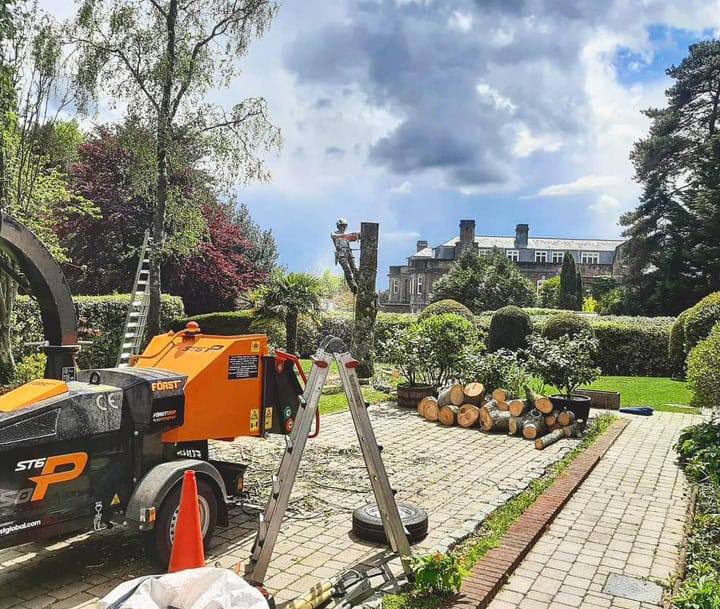
Why Professional Stump Grinding Is Better Than Trying to Remove a Stump by Hand
Once a tree has been felled, the remaining stump can easily become an awkward feature within the garden. Although removing it by hand may initially seem straightforward, established tree stumps are often far more difficult to deal with than their appearance suggests. Beneath the visible timber is a substantial root system that can make manual removal extremely demanding and disruptive.
For homeowners in Bingham, Nottingham, professional stump grinding provides a practical way to remove unwanted stumps without the extensive excavation normally associated with digging them out. Specialist machinery reduces the stump below ground level, helping restore usable garden space efficiently. Stump grinding is also commonly used to address issues such as trip hazards, unwanted regrowth and obstacles to future landscaping.
At Bingham Tree Surgeons, professional stump grinding allows the work to be approached according to the stump’s size, position and surrounding garden features.
Why Are Tree Stumps So Difficult to Remove by Hand?
A tree stump is not simply a short section of trunk sitting loosely in the soil. It is connected to a network of roots that once supported and supplied the entire tree.
Depending on the species, age and size of the tree, these roots may be thick, widespread and firmly embedded in compacted ground.
Manual removal can therefore involve:
- Digging extensively around the stump
- Exposing large structural roots
- Cutting roots individually
- Removing substantial quantities of soil
- Attempting to loosen the remaining stump
- Reinstating the disturbed ground afterwards
Even relatively modest-looking stumps can require considerably more work than expected.
What Is Professional Stump Grinding?
Stump grinding uses specialist machinery to mechanically reduce the stump into small wood fragments.
Rather than trying to extract the complete stump and root system in one piece, the grinding equipment works progressively through the timber. The visible stump can be reduced below the surrounding ground level, leaving the area considerably easier to reinstate and reuse.
Professional stump grinding is also suitable where several stumps need attention, providing a systematic approach that avoids manually excavating each one.
Stump Grinding Avoids Extensive Excavation
One of the greatest differences between stump grinding and manual removal is the amount of ground disturbance involved.
Digging a stump out requires access to the roots holding it in position. This can mean creating a substantial excavation around the stump before enough roots can be severed to release it.
Grinding takes a more targeted approach.
The machine works directly on the stump rather than requiring the entire root structure to be exposed first. This can help preserve more of the surrounding garden and reduce unnecessary disturbance.
It Is Particularly Useful for Large, Established Stumps
The difficulty of manual removal increases considerably with stump size.
A mature tree can leave behind a broad stump with thick structural roots extending outwards from the base. Attempting to remove this manually can become an extremely demanding task.
Professional stump grinding equipment is specifically intended to deal with dense timber.
Instead of relying on physical leverage to extract the stump, the machine gradually reduces the material until the required result has been achieved.
Grinding Can Help Create a Safer Garden
An exposed stump can become an inconvenient obstacle, particularly where it sits within a lawn or close to an area regularly used for walking.
As surrounding vegetation grows, smaller stumps can also become less obvious.
Professional grinding removes the prominent obstruction, helping create a more practical surface for everyday garden use. Removing stumps below ground level is specifically useful for reducing surface obstructions and trip hazards.
It Creates More Usable Outdoor Space
Once the tree has gone, leaving the stump behind can prevent homeowners from making full use of the cleared area.
A stump may interfere with:
- Lawn areas
- New planting
- Garden paths
- Landscaping layouts
- Seating areas
- General garden maintenance
Grinding the stump opens the area up for future use.
This can be particularly beneficial when tree removal forms part of a wider plan to reorganise or improve a garden in Bingham.
Stump Grinding Can Reduce Unwanted Regrowth
Tree removal does not always mean growth immediately stops.
Some species can produce shoots from the remaining stump or root system. These shoots can become an ongoing maintenance issue, particularly where the original objective was to remove the tree completely.
Professional stump grinding removes the main stump structure and can reduce the likelihood of persistent regrowth from that point. The potential for unwanted shoots is one of the reasons completing tree removal with stump grinding can be worthwhile.
Decaying Stumps Can Become Unattractive
If a stump is left in place, natural decomposition gradually begins breaking down the timber.
During this process, the stump may become soft, fragmented and increasingly weathered. Fungal growth and insects may also become associated with decaying timber.
Although decomposition is natural, an old stump may not fit with the appearance of a tidy, maintained garden.
Grinding removes the prominent timber and allows the area to be incorporated more effectively into the surrounding landscape.
Manual Digging Can Disturb a Much Larger Area
Removing a stump by hand is rarely confined to the exact footprint of the trunk.
To reach major roots, soil usually needs to be removed around the stump. The larger the root system, the wider this excavation may become.
That disturbance can be inconvenient where a stump is situated near an established lawn, planting or other garden features.
Professional grinding concentrates work much more closely around the stump itself.
This makes it particularly valuable where minimising unnecessary disruption is a priority.
Nearby Features Require Careful Consideration
Not every stump is located in the middle of an open lawn.
Stumps can remain close to:
- Fences
- Paths
- Driveways
- Patios
- Flower beds
- Garden boundaries
- Other established planting
These surroundings can make manual excavation even more difficult.
Professional stump grinding begins with assessing the location and determining how the machinery can be used appropriately around nearby features.
Stump Size Is Not the Only Factor
Two stumps of similar diameter may require different approaches.
The difficulty of stump removal can also depend on the tree species, root structure, ground conditions, surrounding access and how close the stump is to other features.
Professional assessment considers these factors before work begins.
This is one reason specialist stump grinding provides a more controlled approach than simply beginning to dig and discovering the extent of the root system as the work progresses.
What Happens to the Roots After Stump Grinding?
Stump grinding generally focuses on removing the main stump and relevant surface obstructions rather than excavating every root extending through the surrounding ground.
This is an important distinction between grinding and complete physical extraction.
Once disconnected from the tree, remaining underground roots will gradually break down naturally.
Where future plans for the area require particular ground conditions, the intended use of the space should be considered when deciding how extensively the stump needs to be treated.
Professional Equipment Makes a Significant Difference
Tree stumps consist of dense timber and can be extremely resistant to manual removal.
Specialist grinding machinery is designed specifically for this work. It allows the stump to be reduced progressively and to an appropriate depth rather than relying on digging, chopping and physical leverage.
Professional equipment can provide:
- Controlled stump reduction
- More efficient removal
- Less extensive excavation
- Access to difficult timber below surface level
- A cleaner basis for reinstating the area
The effectiveness of stump grinding depends not only on having the equipment but also on knowing how to use it appropriately for the individual site.
Stump Grinding Can Complete a Tree Removal Properly
Tree felling removes the above-ground tree, but it does not automatically remove the obstruction at ground level.
Where the objective is to clear the area completely for future use, stump grinding provides a logical final stage.
Without it, homeowners can be left with a garden feature that continues to restrict mowing, planting or landscaping long after the tree itself has disappeared.
Removing the stump can therefore transform tree felling from simply taking down the tree into genuinely reclaiming the space.
Why Professional Stump Grinding Is the Practical Choice
Attempting to remove a stump manually can quickly become a much larger undertaking than anticipated.
Professional grinding replaces extensive excavation with a specialist mechanical process designed specifically for tree stumps. It can reduce disruption, deal effectively with substantial timber and leave the area considerably easier to manage afterwards.
At Bingham Tree Surgeons, we assess the stump and its surroundings before determining the appropriate approach. This allows stump grinding to be carried out with consideration for the wider garden rather than treating every stump in exactly the same way.
When Should You Consider Having a Stump Ground Out?
Not every stump causes an immediate problem, but professional removal becomes particularly worthwhile when it:
- Creates a trip or mowing obstacle
- Produces unwanted shoots
- Restricts future landscaping
- Takes up useful garden space
- Has begun deteriorating
- Interferes with paths or other garden features
- Makes an otherwise cleared area look unfinished
Stumps can restrict landscaping options and leave gardens less practical even after the original tree has been removed.
Conclusion
Professional stump grinding is generally a far more practical approach than attempting to dig an established tree stump out by hand. Tree stumps are connected to substantial root systems, meaning manual removal can involve extensive excavation, considerable ground disturbance and a great deal of effort.
Stump grinding tackles the problem differently. Specialist machinery reduces the stump below ground level, helping remove surface obstructions while limiting unnecessary disturbance to the surrounding area. It can improve garden usability, reduce unwanted regrowth and create greater flexibility for future landscaping.
For homeowners in Bingham, Nottingham, Bingham Tree Surgeons provides professional stump grinding as part of our tree surgery services. If an old stump is preventing you from making full use of your garden, contact our team to arrange an assessment and discuss the most suitable way to clear the area.
Call us on: 0115 647 1176
Click here to find out more about Bingham Tree Surgeons
Click here to complete our contact form and see how we can help with your tree needs.